

Can an always-on conversation layer really stop 40% of missed calls from turning into lost bookings?
We open by defining how a true voice layer in hospitality answers, routes, and resolves needs that used to drown in phone menus. Up to 40% of calls go unanswered, and that gap costs bookings and trust.
Modern systems work 24/7, keep service consistent across channels, and can integrate with PMS, CRS, CRM, booking engines, and payments. Some platforms support 100+ languages and deploy in under 30 minutes.
We’ll show how these tools cover the full stay cycle — before arrival, during check-in, and after checkout — and why instant handling looks like faster responses, fewer transfers, and clearer communication.
In this roundup we compare hotel-ready assistants built around real workflows, not generic call-center software. We include options that suit both enterprise groups and independent properties.
Key Takeaways
- Missed calls cost revenue; always-on systems reduce that gap.
- Integrated tools keep service and communication consistent.
- Real deployments can launch fast and support many languages.
- Solutions must map to real hotel workflows, not generic scripts.
- Expect better conversion, satisfaction, and incremental revenue.
Why voice AI is becoming a must-have for U.S. hotels right now
D. Unanswered calls expose a clear revenue gap at the busiest check-in times and overnight shifts.
Unanswered calls and missed bookings
Up to 40% of calls to hotels go unanswered, and that leak maps directly to lost bookings and lower direct revenue.
When callers can’t get a quick answer, many switch to third-party channels or abandon the booking entirely.
Staffing pressure in the hospitality industry
We see staffing strains across the U.S.; 87% of properties report shortages. That makes true 24/7 phone coverage hard to sustain.
The front desk cannot always juggle in-person service and incoming calls at peak times. This creates service gaps and slower responses.
What hotels are seeing
Real outcomes include an 80% drop in missed calls, +25% in ancillary revenue, and +27% in satisfaction. These are operational wins, not just marketing claims.
Leaders are taking note: Deloitte finds 70%+ of hotel executives prioritizing investment in this area in 2025. That makes the tech as much a business decision as an efficiency play.
| Metric | Before | After | Impact |
|---|---|---|---|
| Missed calls | Up to 40% | ~8% | 80% fewer missed calls |
| Ancillary revenue | Base | +25% | More upsell conversions on phone |
| Guest satisfaction | Baseline score | +27% | Higher NPS and reviews |
| Executive priority | Mixed | 70%+ prioritizing | Budget and roadmap shifts |
What voice AI actually handles across the guest journey
We break the stay cycle into three clear phases so you can map coverage to daily operations. Below we show common tasks the assistant resolves and when staff should step in.
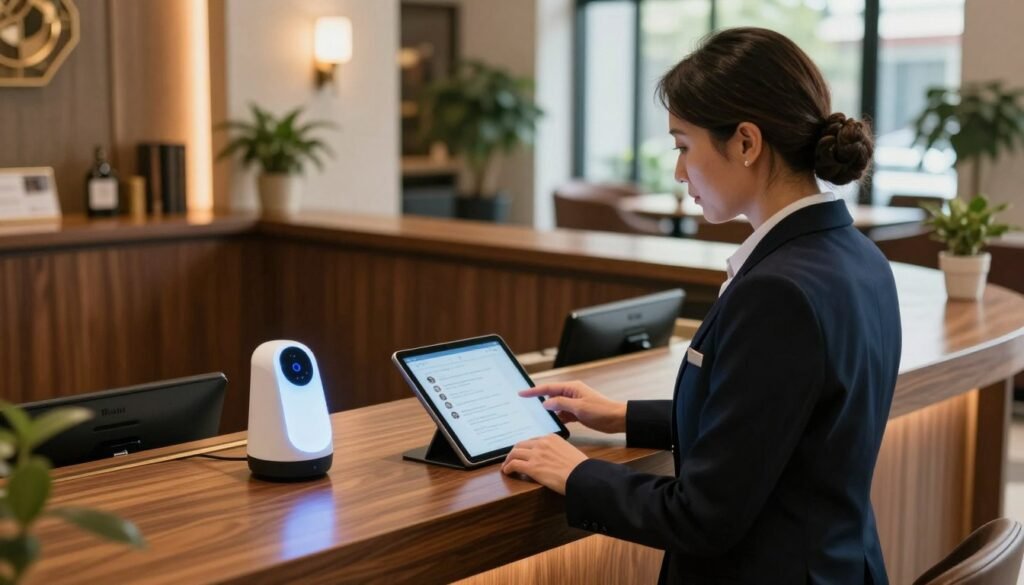
Pre-stay inquiries and reservations
Availability, rates, and modifications get answered instantly. The assistant shares confirmations, policies, directions, and amenity details.
This reduces price-check calls and helps capture direct bookings when travelers compare options.
In-stay service and front desk overflow
Repeated questions about hours, parking, late checkout, and pool rules are handled immediately.
Concierge-style assistance—local tips and dining suggestions—are offered, with complex items routed to staff.
Post-stay follow-up and routing
We close loops faster on follow-ups, lost-and-found, and complaint routing. That yields cleaner handoffs and higher satisfaction.
| Phase | Common tasks | When to escalate |
|---|---|---|
| Pre-stay | Rates, availability, reservations, confirmations | Complex billing or group booking |
| In-stay | Service questions, directions, concierge tips | Safety, maintenance, refunds |
| Post-stay | Follow-ups, lost-and-found, issue routing | Legal claims or detailed investigations |
Top benefits of voice AI for hotel guest requests
Instant, reliable phone handling changes how teams work at peak hours and overnight.
Instant responses 24/7 without phone trees. We remove long menus and callbacks so callers get quick answers any hour of the day. That means no more missed calls and fewer lost bookings.
Front desk efficiency: handling many calls while staff focus on in-person guests
When multiple calls arrive, the system handles them at once. Our desk team can stay with guests standing at the counter. This improves throughput and cuts lobby friction.
Consistent, on-brand service across channels with one model
Using a single model across voice, text, and chat keeps tone and facts aligned. We avoid mixed messages and boost the overall experience.
Upsells and cross-sells during calls to lift revenue
Smart suggestions—late checkout, parking, and breakfast—feel natural and helpful. These subtle offers raise ancillary revenue while protecting satisfaction.
Measured outcomes show fewer missed calls, higher conversion, and improved satisfaction when the system is trained and integrated correctly.
| Benefit | What it fixes | Typical impact |
|---|---|---|
| 24/7 responses | Missed calls and long waits | 80% fewer missed calls |
| Desk throughput | Lobby friction and staff multitask | Faster check-in, less stress |
| One model | Inconsistent messaging across channels | More consistent service and experience |
| Revenue uplift | Missed upsell opportunities | +20–30% ancillary revenue |
How we evaluated hotel voice AI systems for this roundup
To judge each product, we ran scenario calls pulled from real front-desk and reservation workflows. We scored how well the platforms handled common tasks, how fast they launched, and what teams needed to maintain them.
Call handling quality
Natural language understanding took priority over IVR-style routing. We flagged systems that forced menu choices and those that handled open-ended requests smoothly.
Integrations checklist
We required solid links to PMS, CRS, CRM, booking engines, and payments. Without live data, a system often returns wrong info and creates extra work for staff.
Languages and translation
We compared language counts and live translation quality. Some vendors support 100+ languages while others cover 15–60. Accuracy on calls mattered most.
Deployment speed, operational fit, pricing and support
Fast launches and short training windows scored higher. We also weighed whether a solution focused on reservations, front-desk overflow, or concierge tasks. Pricing transparency and clear support paths—onboarding, tuning, and escalation—were tie-breakers.
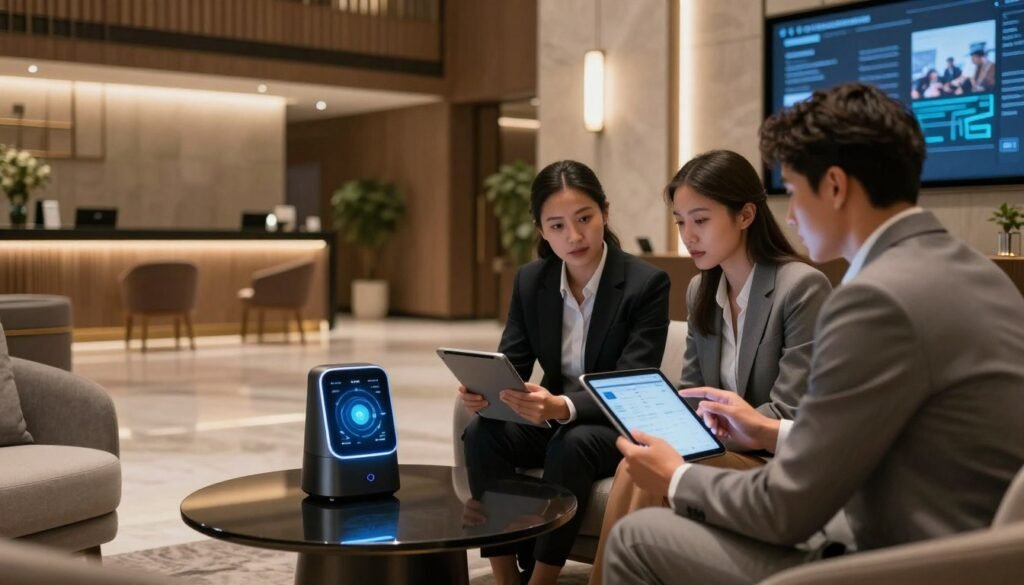
| Factor | What we checked | Example data |
|---|---|---|
| Call quality | NLU vs IVR, drop-off rate | NLU preferred; IVR raises drop-offs |
| Integrations | PMS/CRS/CRM/booking/payments | Canary: full stack; Dialzara: Zapier links |
| Languages | Live translation count & accuracy | Canary 100+, Aiello 58, HotelPlanner 15 |
| Speed & pricing | Deploy time, trial, cost clarity | Canary |
Roundup of the best AI voice assistants for hotels to answer calls and capture bookings
We summarize seven market-ready assistants and who each fits best.
HiJiffy Voicebot
Enterprise-grade communication with PMS and CRM links. Processed ~3M conversations and drove $43.37M in bookings. Good for large groups that need multi-channel parity.
HotelPlanner Booking Assistant
Built to handle high-volume reservation calls. Trained on 8M+ reservation interactions and supports 15 languages to protect conversion at peak times.
Asksuite
An omnichannel platform that manages web chat and messaging apps. Supports 37 languages and hooks to 100+ systems, resolving a large share of inquiries before escalation.
Canary AI Voice
Fast deployment under 30 minutes, one-model coverage across voice, text, and chat, and 100+ language support. Suited to properties that want rapid launch and unified tracking.
Aiello AVA
In-room assistant that links concierge tasks and reservations. Deploys to rooms and can cut front desk call volume—reported drop around 43%.
Riviera Phone Booking System
White-glove option with consultation and custom setup. Specs are limited publicly; best for teams that want tailored implementation.
Dialzara
Budget-friendly plan starting at $29/month, setup under 10 minutes, Zapier integrations, and per-minute pricing. Easy to trial with a 7-day window.
Which solution fits your property type and operations best
Choosing the right platform starts with matching product strengths to how your property runs day-to-day.

Large hotel groups and multi-property operations
Pick enterprise-grade assistants like HiJiffy when you need governance, cross-property consistency, and deep PMS links.
These systems scale across sites and keep communications uniform.
International guest mix and multilingual requirements
Choose platforms such as Canary or Aiello if languages and live translation affect conversion.
Accuracy reduces misunderstandings and speeds service recovery.
Omnichannel needs across voice, chat, and messaging apps
Asksuite is a fit when your team must manage chat and calls in one place.
Unified communication prevents duplicate work and saves staff time.
Boutique and independent hotels focused on speed-to-value
Dialzara suits smaller properties that need fast setup, low cost, and clear ROI.
“Match call volume and staffing to vendor strengths, then rule options in or out with a short checklist.”
- Must-haves: PMS links, uptime SLA, clear escalation path.
- Nice-to-haves: 100+ languages, advanced upsell flows, white-glove onboarding.
Remember: the best choice depends on where most calls originate—reservations or service—and on seasonal staffing in the U.S. hospitality industry.
Implementation checklist: integrating voice AI with your front desk and tech stack
We start with a short checklist so teams can implement quickly and minimize risk. A clear plan keeps operations steady during setup and helps staff focus on in-person service.
Mapping call flows
Map which inquiries we fully automate (amenities, hours, parking) and which we assist (reservations with edge cases).
Define immediate escalations: safety issues, refunds, or billing disputes must go to staff with priority context passed along.
Connecting core systems
Sync the system with PMS, CRS, CRM, booking engine, and payments so answers use live data, not static scripts.
Use call forwarding or Zapier hooks for fast activation while you validate deeper integrations.
Unified inbox and workflows
Unify voice, text, and chat threads in one inbox so the front desk and other teams see the same history.
This prevents repeated questions and reduces handoff friction across shifts and channels.
Brand voice and knowledge base
Build a compact KB with policies, room types, pet rules, parking, and fee explanations. Train the model to use your brand tone.
Practice edge cases: cancellations, accessibility needs, and special room assignments during pilot tests.
Measuring success and rollout
Track missed-call reduction, average response time, booking conversion rate, upsell revenue, and post-call satisfaction weekly.
Roll out in three steps: pilot → tune (adjust scripts and integrations) → expand across shifts and properties.
- Pilot: Run peak-time tests and collect transcripts.
- Tune: Fix gaps, tighten escalations, and train staff on new handoffs.
- Expand: Scale integrations and monitor KPIs to sustain gains.
Conclusion
To conclude, modern call-handling systems turn missed opportunities into measurable gains. ,
Key facts: up to 40% of calls go unanswered; property teams report ~80% fewer missed calls, +25% ancillary revenue and +27% higher satisfaction when the right assistant is in place.
We recommend shortlisting 2–3 vendors (HiJiffy, HotelPlanner, Asksuite, Canary, Aiello, Riviera, Dialzara), then running a short pilot. Prioritize integrations with PMS and live workflows so staff can focus on in-person service and concierge needs.
Start small, measure response time and conversion, then expand once results are consistent. This simple path protects bookings, lifts revenue, and improves the guest experience across U.S. hospitality.
FAQ
What problems do we solve with voice assistants in hospitality?
We reduce missed calls and lost revenue by answering inquiries and booking calls instantly. Our system handles overflow during busy times so staff can focus on in-person service, improving operations, response time, and guest satisfaction.
How do we compare to traditional phone trees and IVR systems?
We use natural language understanding to route requests and complete tasks rather than forcing callers through rigid menus. That means fewer transfers, faster resolutions, and a more consistent, on-brand experience across phone and chat channels.
What parts of the guest journey can we cover?
We support pre-stay reservation tasks like rates, availability, and modifications; in-stay needs such as concierge-style requests and front desk overflow; and post-stay follow-ups, lost-and-found, and issue routing to operations or revenue teams.
Can our system integrate with property systems like PMS, CRS, and CRM?
Yes. We connect with major PMS and CRS platforms, sync guest records with CRM, and work with booking engines and payment providers so information flows seamlessly and staff workflows remain unified.
Do we support multiple languages and translation for international guests?
We offer multilingual and translation capabilities to serve diverse travelers. That improves satisfaction and reduces the need for specialized staff, helping international operations and multilingual teams work more efficiently.
How quickly can we deploy and train the system for a property?
Deployment speed varies by property size and integrations, but many teams get baseline service live in days and a full, branded knowledge base trained within weeks. Fast training minimizes disruption to operations.
What benefits should we expect for revenue and upsells?
Our assistants capture bookings and present targeted upsells and cross-sells during calls, lifting ancillary revenue while reducing abandoned reservations. Consistent, on-brand offers boost conversion and average booking value.
How do we measure success after implementation?
We track missed-call reduction, average response time, booking conversion rate, ancillary revenue lift, and guest satisfaction scores. These KPIs show operational impact and return on investment.
Is pricing transparent and are trials available?
We provide clear pricing tiers, pilot trials, and support plans so teams can evaluate fit without surprise costs. Trials let properties test integrations, call handling quality, and operational fit before committing.
Which property types benefit most from our solution?
Large groups and multi-property operations gain scale and consistency; international hotels benefit from multilingual support; omnichannel properties see unified messaging across phone and chat; and independents and boutiques enjoy fast setup and cost-effective plans tailored to their needs.
How do we ensure the system uses our brand voice and policies?
We build a brand voice and knowledge base during onboarding, training the model on your scripts, policies, and FAQs. Ongoing edits let operations and front desk teams keep responses current and compliant.
What does implementation typically require from our team?
We collaborate on mapping call flows, connecting PMS/CRS/CRM, and defining escalation paths. Your team provides brand materials and access to systems; we handle technical integration and staff training to accelerate time-to-value.
How do we handle escalations to front desk or reservations staff?
We define clear escalation rules and unified inbox workflows so complex or high-value calls route to staff with contextual notes. That keeps service seamless and avoids duplicate effort across teams.
Can independent hotels integrate with Zapier or other lightweight tools?
Yes. For smaller properties, we support Zapier and similar connectors to link booking platforms, CRMs, and messaging apps quickly, offering affordable automation without heavy IT overhead.
How do we protect guest data and payments during calls?
We follow industry security standards for data handling and payment processing, using encrypted connections and compliant payment integrations to safeguard guest information and reduce liability for operations.