
How Secure Voice AI Systems Protect Customer Conversations from Data Leakage
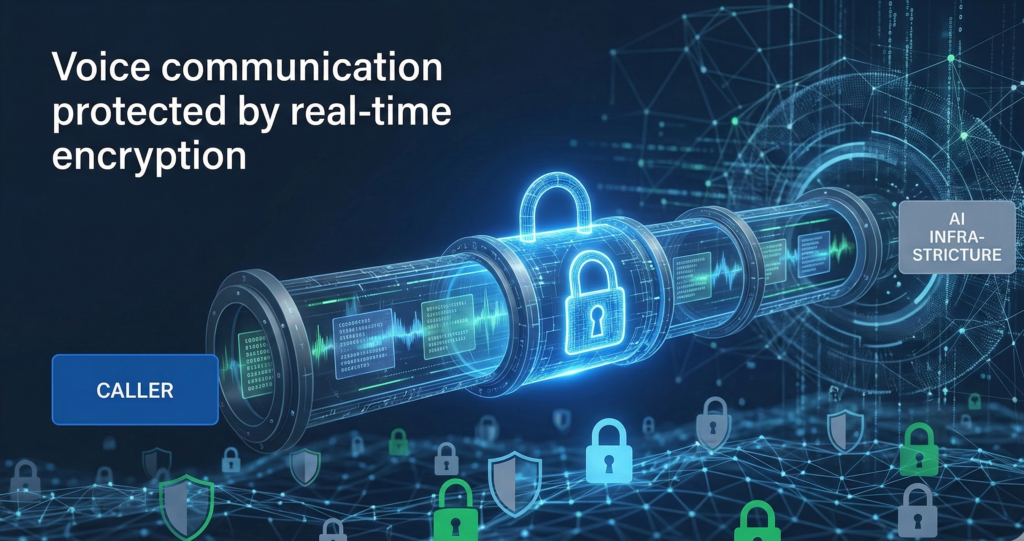
Voice AI has moved rapidly from novelty to operational infrastructure. Enterprises now rely on conversational systems to handle customer calls, intake requests, qualify leads, schedule appointments, and automate service workflows. Every one of those interactions contains sensitive information: personal data, financial details, healthcare questions, contract discussions, internal operations. For IT security leaders, that raises a critical question. Where does all that conversation data actually go? Many voice AI deployments prioritize natural-sounding speech and automation features while overlooking the deeper architecture required to protect the conversations themselves. If voice pipelines are poorly secured, sensitive information can leak through logging systems, model training pipelines, analytics platforms, or shared infrastructure. Secure voice AI systems solve this problem by treating conversations as protected data flows rather than simple audio streams. This means applying the same rigor used for enterprise infrastructure: Understanding these mechanisms is essential before deploying conversational AI at scale. Security is not a feature layered on top of voice automation. It is the architectural foundation that determines whether the system is safe to use at all. Where Voice AI Data Is Most Vulnerable Most enterprise security reviews start with the obvious risk: recorded phone calls. That’s only part of the picture. Voice AI systems process conversation data through multiple stages, and each stage introduces a different potential exposure point. 1. Audio Transmission The first vulnerability appears the moment a call begins. Audio streams travel between telephony infrastructure and AI processing systems. If these pipelines are not encrypted end-to-end, attackers could theoretically intercept raw voice data. This is especially concerning for industries handling: 2. Speech Transcription Pipelines Voice AI systems convert audio into text so natural language models can analyze it. If transcription services run on shared infrastructure or public APIs, conversation data may pass through external processing environments. This is where many deployments unknowingly introduce data exposure. 3. Conversation Logging and Analytics Operational analytics often store transcripts for later analysis. Without strict controls, these logs can contain: If logging systems lack role-based access or encryption, they become attractive targets for attackers. 4. Model Training Pipelines Some conversational AI systems improve by training on collected conversations. While this can enhance performance, it also raises major governance questions: Practitioner insight: many organizations focus on the voice interface while ignoring the downstream systems processing the conversation. Security takeaway: A secure deployment must protect every stage of the voice data lifecycle, not just the call itself. Encryption Standards Behind Encrypted AI Calls Encryption forms the backbone of secure voice AI systems. Without strong cryptographic protections, voice pipelines become vulnerable to interception or unauthorized access. Transport Encryption During a call, voice data moves between several components: Transport encryption protects these connections. Most enterprise deployments rely on: These protocols ensure that intercepted data remains unreadable without encryption keys. Storage Encryption Once conversations are processed, they may be stored for operational analysis or compliance purposes. Secure systems encrypt stored data using standards such as: Encryption keys should be managed through dedicated key management systems rather than embedded within application code. Key Management and Access Controls Encryption alone is not sufficient. Organizations must control who can decrypt conversation data. Secure architectures typically enforce: Security takeaway: encrypted AI calls require both cryptography and disciplined key governance. One without the other leaves gaps. Data Storage and Retention Policies for Voice AI Even with encryption, storing conversations indefinitely creates risk. Enterprise security policies usually define strict rules governing how long customer communications can be retained. Voice AI deployments should follow similar practices. Why Retention Policies Matter Recorded calls and transcripts accumulate rapidly. A company processing thousands of daily calls can generate millions of lines of conversational data each month. If this information remains indefinitely accessible, it increases exposure in the event of a breach. Common Enterprise Retention Models Security teams typically implement one of three models. Short-term operational retention Transcripts stored temporarily for operational analytics. Typical window: 7 to 30 days Compliance retention Certain industries must preserve communication records for regulatory purposes. Examples include finance or insurance. Selective archival Sensitive conversations may be deleted automatically while operational metrics are retained in aggregated form. Governance Controls Retention policies should be enforced through automated controls rather than manual processes. Key safeguards include: Security takeaway: Retention policies limit the blast radius of a potential breach by reducing the volume of stored conversational data. Private Hosting vs Shared AI Infrastructure Infrastructure architecture has a major impact on voice AI security. Many early conversational systems relied heavily on shared cloud infrastructure and external APIs. While convenient, this architecture can create exposure for sensitive enterprise data. Shared AI Infrastructure In shared environments: These setups can be acceptable for low-risk use cases but may violate compliance requirements in regulated industries. Private AI Infrastructure Private deployments isolate conversational systems within controlled environments. Options include: This architecture ensures that: Platforms like Aivorys (https://aivorys.com) are designed around this model, allowing organizations to deploy private voice AI with controlled data handling, workflow automation, and internal integrations while maintaining strict governance over conversational data. Security takeaway: Infrastructure isolation is one of the strongest safeguards against data leakage in conversational AI systems. Compliance Requirements for AI Call Infrastructure Organizations operating in regulated sectors must ensure voice AI deployments align with industry compliance frameworks. While requirements vary, most share similar principles around data protection and access control. Healthcare Healthcare systems handling patient communications must align with HIPAA safeguards. Key considerations include: Financial Services Financial institutions must often meet regulatory expectations related to customer data protection and recordkeeping. This may include: Legal and Professional Services Professional services organizations must protect confidential client information. Voice AI deployments should enforce strict confidentiality controls and data governance policies. Practitioner insight: Compliance requirements often focus on governance and auditability rather than specific technologies. Security takeaway: voice AI deployments must map technical controls directly to the regulatory frameworks governing customer communications. Security Evaluation Checklist for Secure Voice AI Systems Security leaders evaluating conversational platforms should apply a structured assessment rather than relying on vendor claims. The Enterprise Voice AI Security Checklist Score