
Your AI Assistant Is Logging More Data Than You Think: Hidden Exposure Risks
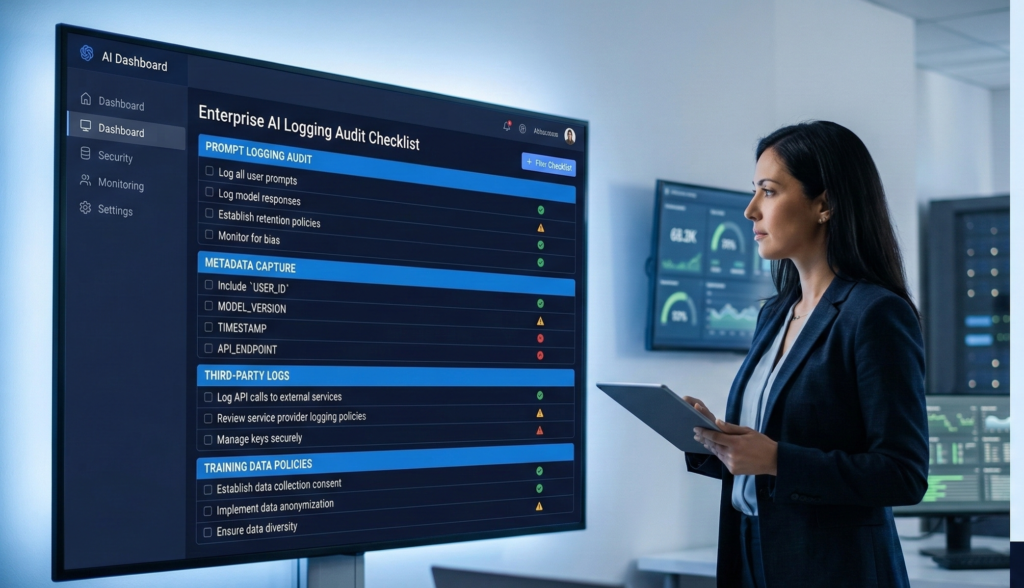
AI systems appear deceptively simple from the user interface: type a prompt, receive a response. But beneath that interaction sits a complex telemetry layer recording prompts, responses, metadata, and operational signals. For many organizations, that hidden infrastructure introduces serious AI data logging risks. Prompts may contain internal documents. Responses may reference proprietary information. API requests often include identifiers, timestamps, and behavioral signals. And in many AI platforms, those records are automatically stored in logs that engineering teams rarely audit. The result is a quiet accumulation of sensitive information across logging pipelines, monitoring dashboards, and third-party analytics tools. The risk rarely appears during the pilot phase. It emerges months later—during a compliance review, internal security audit, or breach investigation—when teams discover that their AI assistant has been recording far more operational data than expected. This article examines the most common categories of AI logging exposure, why they often go unnoticed, and how technical leaders can implement controlled audit trails without sacrificing observability. The AI Logging Layer Most Teams Forget Exists Most AI discussions focus on models, prompts, and outputs. Very few address the logging layer that surrounds them. Yet modern AI systems generate multiple classes of logs automatically: Each of these can contain sensitive information. Prompt and Response Logging Many AI platforms record prompts and responses to support: That means the following may be stored automatically: Even if the AI system itself is secure, logged prompts may create an entirely separate data exposure surface. Observability Platforms Multiply the Exposure Logs rarely stay in one place. Engineering teams commonly route them through: Each additional system increases the attack surface. The AI model may be secure—but its logs may exist across half a dozen systems. Takeaway:Before approving enterprise AI deployments, CTOs should audit not only the model provider but also the entire logging and monitoring pipeline surrounding it. API Request Metadata: The Silent Data Leak One of the least understood sources of AI data logging risks is API metadata. Even when prompt content is removed, API requests often log contextual data such as: Individually these fields seem harmless. Combined, they create a detailed behavioral record. Why Metadata Matters Metadata can reveal: This information can be valuable for monitoring—but it also creates compliance exposure. In regulated industries, metadata can qualify as sensitive operational data. A Common Scenario Consider a healthcare scheduling assistant: Even if patient names are removed, logs might record: Those fields may still fall under regulatory data protection frameworks. Takeaway:Enterprise AI monitoring should treat metadata as sensitive operational data, not harmless system noise. The Retraining Trap: When Logs Become Training Data Many organizations assume logs are temporary records. In practice, they often become something else: training datasets. AI vendors frequently collect prompt and response logs to improve model performance. This process can create unexpected exposure. The Mechanism Typical workflow: If those logs contain proprietary content, they may enter training pipelines. Why This Creates Risk Several concerns emerge: For enterprises, this raises governance questions about data residency, retention, and model ownership. Platforms built for enterprise deployments increasingly separate operational logging from model improvement pipelines to prevent this risk. Platforms like Aivorys (https://aivorys.com) are built for this exact use case — private AI with controlled data handling, voice automation, and CRM-connected workflows where operational data remains inside the organization’s controlled environment. Takeaway:Always verify whether your AI vendor uses prompt logs for training—and whether opt-out controls actually isolate your data. Third-Party Logging Tools Multiply Exposure Logging rarely happens inside the AI platform alone. Most engineering stacks send logs to external infrastructure such as: These integrations are useful—but they create additional data flows. A Typical Enterprise Logging Pipeline A single AI interaction may produce logs that travel through: Each stage may store copies of the data. The Hidden Problem Security reviews often focus on the AI vendor. But third-party logging tools may store more data than the AI provider itself. These tools may also retain logs for months or years depending on configuration. Takeaway:AI risk reviews must map the entire log lifecycle—not just the AI system. The AI Logging Audit Checklist CTOs Should Run Most organizations have never performed a structured AI logging audit. A simple framework can quickly identify exposure risks. AI Logging Risk Assessment Checklist Evaluate your AI system across five categories. 1. Prompt Logging 2. Response Storage 3. Metadata Collection 4. Third-Party Log Routing 5. Model Training Exposure Score each category: Risk Level Criteria Low Minimal logging, strict retention, isolated datasets Medium Logs retained but controlled and audited High Prompt logging + third-party storage + unclear retention Takeaway:Most enterprises discover their highest exposure risk not in the AI model itself—but in the surrounding logging ecosystem. Designing Controlled AI Audit Trails AI systems still require logging. Without it, teams lose visibility into performance, errors, and misuse. The goal is not eliminating logs—it’s controlling them. Principles of Secure AI Audit Logging 1. Data Minimization Log only what is necessary for system monitoring. Remove: 2. Structured Logging Policies Define explicit rules: 3. Segregated Storage Separate: This prevents cross-contamination. 4. Encryption and Access Controls Logs should be protected like any sensitive dataset. Use: Takeaway:AI logging must be treated as a security system—not merely a developer convenience. Data Minimization: The Most Effective Risk Reduction Strategy The most reliable way to reduce AI data logging risks is straightforward: collect less data. This principle appears consistently in security frameworks and regulatory guidance. Practical Implementation Methods Prompt Redaction Automatically remove: before logs are stored. Tokenized Identifiers Instead of storing user data directly, store anonymized tokens that map to internal records. Log Sampling Not every interaction needs to be recorded. Sampling reduces storage exposure while preserving observability. Short Retention Windows Many AI logs do not require long-term storage. Retention policies of: dramatically reduce breach exposure. Takeaway:Reducing log volume is often more effective than trying to secure massive datasets after they already exist. The Future of Enterprise AI Monitoring The first wave of AI adoption focused on capability. The next wave will focus on governance. As AI becomes embedded in customer support,