
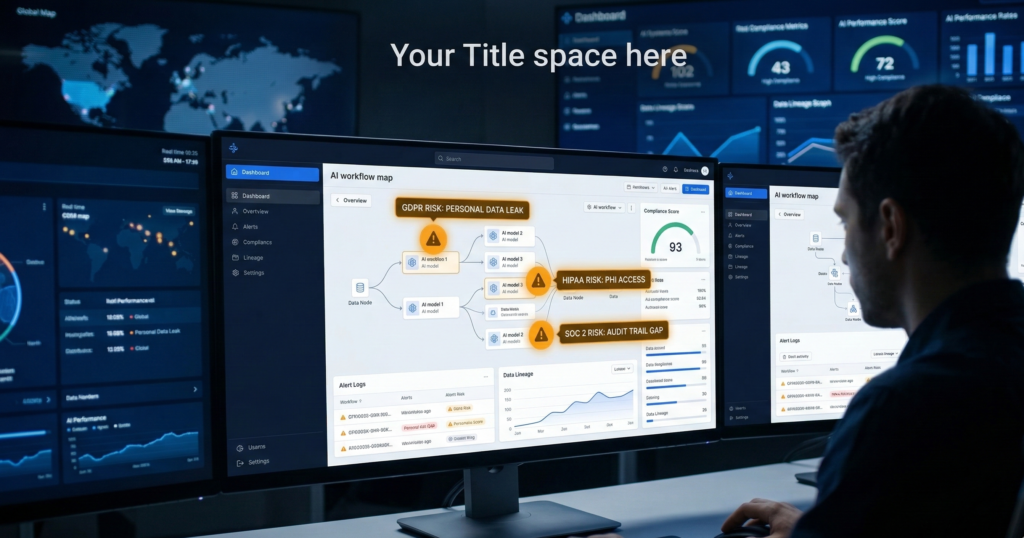
Enterprise phone systems were designed for a different era. An era where calls followed predictable patterns, customer inquiries were simple, and scaling support meant hiring more staff.
That model is breaking.
Modern organizations handle thousands of conversations across sales inquiries, appointment scheduling, service requests, and internal coordination. Traditional PBX systems and phone trees simply route calls from point A to point B. They don’t understand intent. They don’t capture data. And they definitely don’t improve over time.
Voice AI for enterprise changes the role of the phone system entirely. Instead of acting as a passive switchboard, it becomes an intelligent layer that understands conversations, routes requests dynamically, captures operational data, and automates routine interactions.
For operations leaders, this shift is less about replacing phones and more about upgrading the entire communication infrastructure.
The result is a system that can scale customer communication, reduce operational friction, and transform every call into actionable business intelligence.
To understand why enterprises are making the transition, it helps to start with the core limitation of legacy systems.
The Structural Limits of Traditional Enterprise Phone Systems
Legacy phone systems are built on rigid logic.
Press 1 for sales.
Press 2 for support.
Press 3 for billing.
These phone trees were originally designed to manage call volume with minimal staffing. But in practice, they create three persistent operational problems.
1. Phone Trees Don’t Understand Intent
A caller navigating a phone tree often has to guess which option matches their issue.
A new prospect calling about pricing might press “sales.”
A current client requesting a contract update might also press “sales.”
A technical question might land in the wrong department entirely.
The system has no ability to interpret what the caller actually wants.
Every misrouted call adds friction, delays resolution, and wastes employee time.
2. Static Systems Cannot Adapt to Demand
Traditional PBX systems route calls based on predefined rules. They cannot adjust routing based on:
- Call urgency
- Customer history
- Lead qualification signals
- Department availability
- Intent extracted from conversation
This rigidity creates bottlenecks during high-volume periods.
3. Conversations Produce No Operational Intelligence
A conventional phone system captures only surface-level metrics:
- Call duration
- Call volume
- Missed calls
But it cannot answer questions operations leaders actually care about:
- Why are customers calling?
- Which conversations convert to revenue?
- Which departments generate repeat inquiries?
- What patterns signal operational inefficiencies?
In other words, the phone system generates activity but almost no insight.
Voice AI changes that architecture.
Operational takeaway: If your phone system cannot understand conversations or capture structured data from them, it functions as infrastructure rather than intelligence.
How Voice AI for Enterprise Actually Works
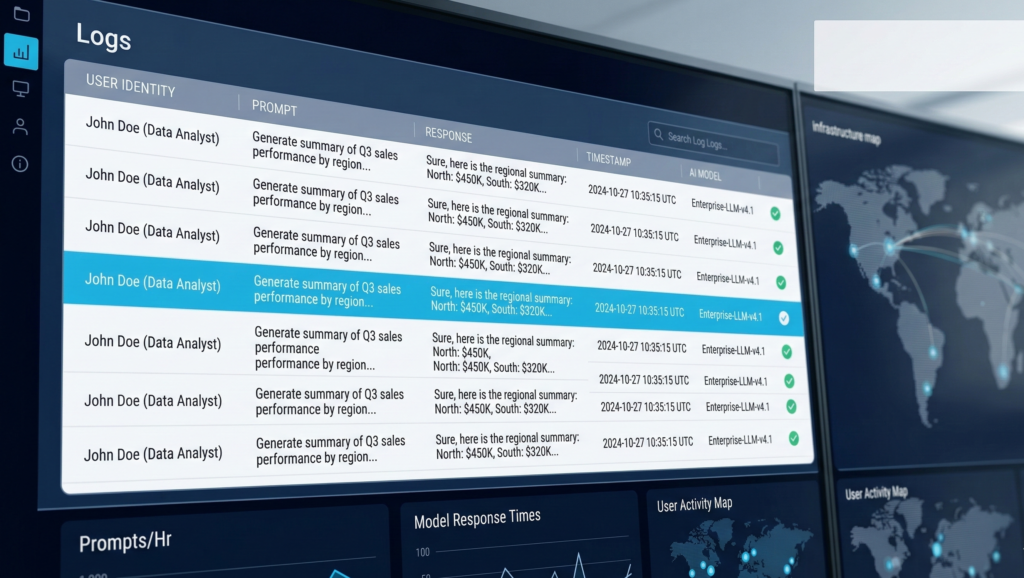
Voice AI systems operate very differently from traditional telephony platforms. Instead of routing calls through static menus, they process conversations in real time.
The architecture typically includes five core layers.
1. Speech Recognition
The system converts spoken language into text with low latency. Modern enterprise systems can transcribe speech within milliseconds.
This allows downstream systems to process meaning as the conversation unfolds.
2. Natural Language Understanding
The next layer analyzes the transcript to detect:
- Caller intent
- Entities (dates, names, locations, account numbers)
- Sentiment and urgency
- Conversation context
This is where conversational AI determines what the caller actually needs.
3. Decision and Workflow Engine
Once intent is detected, the system triggers actions such as:
- Routing to the correct department
- Scheduling appointments
- Answering common questions
- Updating CRM records
- Escalating to a human agent
This decision layer is where enterprise automation begins.
4. Response Generation
The system responds through natural speech using voice synthesis.
Unlike static scripts, responses can adapt dynamically based on conversation context.
5. Analytics and Data Capture
Every interaction becomes structured operational data:
- Inquiry categories
- Conversion outcomes
- Lead sources
- Response times
- Call resolution paths
This information feeds dashboards that reveal patterns across thousands of conversations.
Platforms like Aivorys (https://aivorys.com) are built for this operational layer. They combine private AI models, voice automation, and workflow integrations so enterprise teams can deploy conversational infrastructure without exposing proprietary data to public AI systems.
Operational takeaway: Voice AI systems turn phone communication into a programmable workflow layer rather than a static routing tool.
Real-Time Intent Detection and Intelligent Call Routing
One of the most powerful capabilities of conversational AI is real-time intent detection.
Instead of asking callers to navigate menus, the system simply asks:
“How can I help you today?”
The caller might say:
- “I want to schedule a consultation.”
- “I’m checking the status of an order.”
- “I need to speak with someone about billing.”
Within seconds, the system identifies the request and determines the correct action.
How AI Routing Differs from Phone Trees
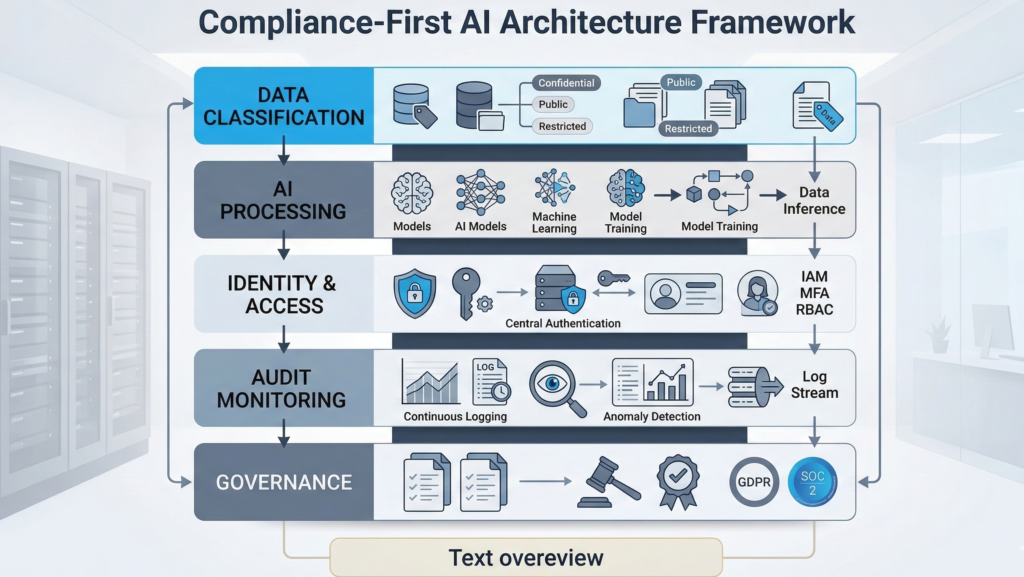
Legacy routing logic:
Caller → presses button → department transfer
AI routing logic:
Caller speaks → intent detected → workflow decision → action
This allows organizations to implement far more sophisticated routing policies.
For example:
Lead prioritization
High-value prospects can automatically route to senior sales staff.
Customer recognition
Returning customers can bypass intake questions.
Urgency escalation
Support calls flagged as urgent can skip queues.
Automated resolution
Routine questions can be answered instantly without human involvement.
Mini Scenario
A healthcare provider receives thousands of inbound calls per week.
With a traditional system:
- Patients navigate long menus
- Front desk staff answer repetitive questions
- Appointment scheduling consumes large portions of staff time
With voice AI:
- Patients simply request appointments
- The system checks availability
- Schedules visits automatically
- Updates the scheduling system in real time
Operational takeaway: Intelligent routing reduces both call handling time and staffing requirements while improving caller experience.
The Staffing and Cost Dynamics Behind AI Phone Systems
Phone-based operations are expensive.
Every call handled by a human agent requires:
- Salary and benefits
- Training and onboarding
- Scheduling coverage
- Call center infrastructure
As call volume grows, staffing grows alongside it.
Voice AI fundamentally changes that cost structure.
Where Enterprises See Immediate Savings
1. Automated first-line intake
Many inbound calls involve routine requests:
- Hours of operation
- Appointment scheduling
- Order status
- Basic product questions
Voice AI handles these automatically.
2. Reduced call transfers
Intent detection routes calls accurately the first time.
Fewer transfers mean faster resolution and lower handling costs.
3. 24/7 availability without staffing expansion
Organizations can provide round-the-clock call handling without night shifts.
A Simple ROI Model
Operations teams often evaluate AI phone systems using a straightforward framework.
Annual Call Volume
Total inbound conversations handled by staff.
Average Handling Time
Minutes per call including transfers and notes.
Fully Loaded Labor Cost
Salary plus benefits and overhead.
Automation Rate
Percentage of calls handled entirely by voice AI.
Example scenario:
- 250,000 annual calls
- 4 minute average handling time
- $32 hourly labor cost
- 40% automation rate
This reduces approximately 6,600 labor hours annually.
For large enterprises, the operational savings become substantial.
Operational takeaway: The ROI of conversational AI comes from automation of routine interactions, not replacing complex human conversations.
Integrating Voice AI with CRM and Operational Workflows
A phone system by itself provides limited value.
The real transformation occurs when voice AI connects directly to operational systems.
This is where enterprise automation becomes tangible.
CRM Integration
Voice AI can read and write data directly to CRM systems.
Examples include:
- Creating new leads from inbound calls
- Updating contact records
- Logging conversation summaries
- Assigning follow-up tasks
This ensures no lead or inquiry disappears after the call ends.
Workflow Automation
Voice AI systems also trigger automated processes such as:
- Sending appointment confirmations
- Dispatching service tickets
- Updating order systems
- Notifying account managers
Every call becomes a workflow trigger.
Call Analytics and Intelligence
With structured conversation data, operations leaders gain visibility into patterns such as:
- Most common customer inquiries
- Sales conversion patterns
- Operational bottlenecks
- Regional demand signals
These insights help organizations improve not just communication, but entire operational processes.
Operational takeaway: The true value of voice AI lies in integration. Without CRM and workflow connectivity, most of its automation potential remains unused.
A Practical Framework for Evaluating Voice AI Platforms
Not all conversational AI systems are built for enterprise environments.
Operations leaders evaluating platforms should focus on five critical dimensions.
The Enterprise Voice AI Evaluation Framework
Score each category from 1–5.
| Category | Key Questions |
|---|---|
| Intent Accuracy | How reliably does the system interpret real-world conversations? |
| Integration Depth | Can it connect to CRM, scheduling systems, and internal tools? |
| Automation Flexibility | Can workflows be customized without engineering effort? |
| Security & Governance | Are data controls, audit logs, and deployment options available? |
| Operational Analytics | Does the platform capture meaningful call intelligence? |
Total possible score: 25
Interpretation:
- 20–25: Enterprise-ready platform
- 14–19: Suitable for mid-market operations
- Below 14: Primarily a call center tool
Operational takeaway: Voice AI platforms should be evaluated as operational infrastructure, not simply as telephony software.
Why Enterprise Communication Is Becoming an AI Layer
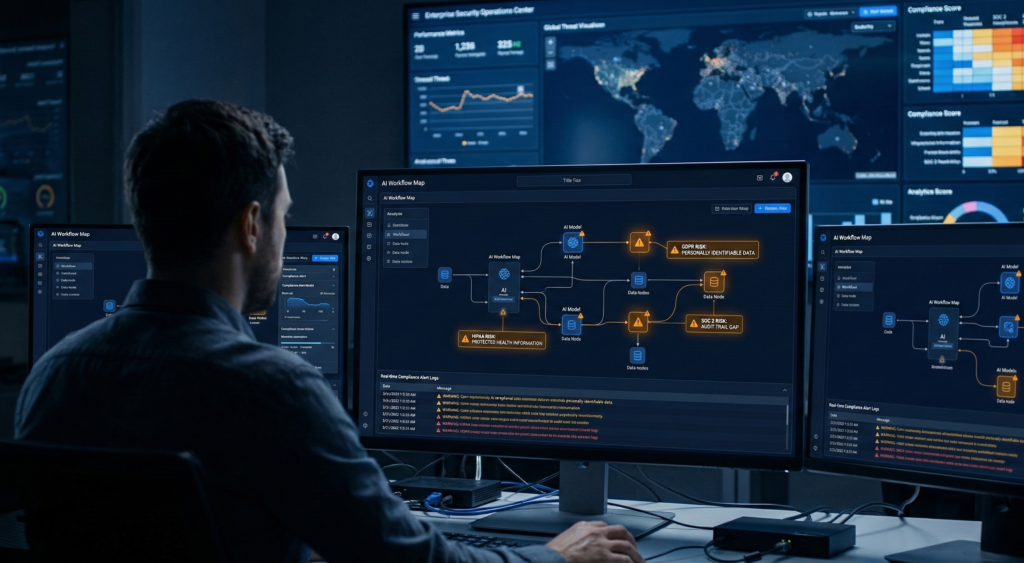
Enterprise communication systems are undergoing a quiet transformation.
Historically, the phone system was infrastructure. It connected callers to employees.
Now it is becoming something very different.
A programmable intelligence layer that sits between customers and operations.
With conversational AI:
- Calls generate structured data
- Workflows trigger automatically
- Lead capture happens instantly
- Support requests resolve faster
- Operational insights accumulate continuously
For operations leaders, this shift means the phone system is no longer just a communication tool.
It becomes part of the company’s automation architecture.
Organizations that recognize this early gain a powerful advantage. They reduce operational friction, capture more opportunities, and turn everyday conversations into actionable intelligence.
If you’re exploring how voice automation could fit inside your operations stack, reviewing a real deployment architecture or requesting a voice AI demo can clarify what implementation actually looks like in practice.
FAQ — Voice AI for Enterprise
What is voice AI for enterprise?
Voice AI for enterprise refers to conversational systems that use speech recognition, natural language processing, and workflow automation to handle phone interactions. Unlike traditional phone systems, voice AI can understand caller intent, automate routine requests, route calls intelligently, and capture structured data from conversations.
How is voice AI different from an IVR phone tree?
An IVR system relies on predefined menus and button selections. Voice AI allows callers to speak naturally, and the system interprets their request in real time. This eliminates long phone trees and enables more accurate routing, automated actions, and conversational responses.
Can voice AI integrate with CRM systems?
Yes. Most enterprise-grade conversational AI platforms connect directly with CRM platforms to create leads, update contact records, log conversations, and trigger follow-up tasks. This ensures that information gathered during calls becomes part of the organization’s operational data.
Is voice AI secure enough for enterprise environments?
Security depends on the platform architecture. Enterprise deployments typically include private AI models, encrypted communication, audit logs, and governance controls. Many organizations also deploy voice AI in private cloud environments to maintain control over sensitive data.
What types of calls can voice AI automate?
Voice AI is particularly effective for routine interactions such as appointment scheduling, order status inquiries, lead qualification, basic support questions, and call routing. More complex or sensitive conversations can still be escalated to human staff when necessary.
How long does it take to implement voice AI?
Implementation timelines vary depending on integrations and workflow complexity. Basic deployments can be configured in weeks, while enterprise-scale systems integrating multiple data sources and automation workflows may take several months.
Conclusion
The enterprise phone system used to be a passive utility. Its job was simple: connect calls and keep lines open.
Voice AI is redefining that role.
Instead of routing conversations blindly, intelligent systems interpret intent, automate workflows, capture data, and continuously improve how organizations handle communication.
For operations leaders, this shift represents more than a technology upgrade. It changes how customer interactions feed into the broader operational engine of the business.
Every call becomes an input.
Every conversation becomes data.
Every interaction becomes an opportunity to automate, optimize, or capture revenue.
And as conversational AI continues to mature, the phone system will increasingly resemble what enterprise infrastructure always aimed to be.
Not just communication.
But operational intelligence.